Choosing the right garden edging material affects how your garden looks, performs and ages over time.
The best option depends on your design, budget, installation requirements and how much support the edging needs to provide. Steel garden edging offers clean lines and long-term durability, while timber, stone, concrete, brick and plastic each suit different styles and applications.
This guide compares the most popular garden edging materials, including their advantages, limitations and ideal uses, helping you choose the right solution for your outdoor space.

Why Garden Edging Material Matters
The material you choose influences more than appearance. It affects the lifespan, installation, maintenance and performance of the finished landscape:
- Aesthetic Appeal: It’s a visible element that frames lawns, paths, flower beds and planting areas, so it should align with your overall style.
- Durability: The material needs to withstand weather, moisture, soil conditions, and potential impacts from lawn equipment & garden tools.
- Functionality: Some edging defines borders, while stronger systems can retain soil or create raised beds.
- Ease of Installation: Certain options are easy to install, DIY-friendly, while others require groundwork & professional support.
- Maintenance: Timber, plastic and painted finishes may need more care than steel, stone or concrete.
Popular Materials for Garden Edging
| Material | Best for | Durability | Installation | Cost level |
|---|---|---|---|---|
| Steel | Modern gardens, curves and clean lines | High | DIY or professional | ££ |
| Concrete | Permanent borders and formal layouts | High | Usually professional | ££–£££ |
| Timber | Natural and cottage-style gardens | Medium | DIY-friendly | £ |
| Natural stone | Traditional and premium landscapes | Very high | Labour-intensive | £££ |
| Plastic | Temporary or low-cost borders | Low–medium | Easy DIY | £ |
| Brick or paving | Paths and formal borders | High | Careful preparation required | ££ |
Here’s a breakdown of the most common edging materials to help you make an informed choice.
1. Steel Edging
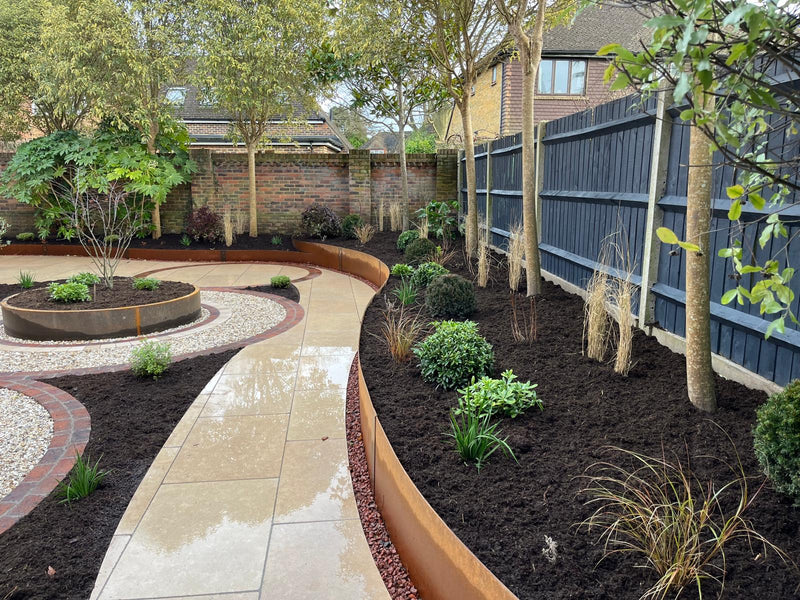
Steel garden edging is a strong, refined option for creating straight lines, sweeping curves and clearly defined borders. It’s a modern choice that suits contemporary gardens and is excellent for achieving a polished, professional look.
Advantages:
- Long-lasting and resistant to wear.
- Suitable for straight and curved layouts.
- Creates a clean, professional finish.
- Available in Corten, galvanised, stainless and powder-coated finishes.
- Requires less visual space than timber, stone or concrete.
Disadvantages:
- Usually costs more than plastic or basic timber.
- Correct fixing and ground preparation are important.
- Weathering steel may cause temporary run-off staining near pale paving.
Example: Groundline Garden Edging is designed for both decorative and practical applications, with flexible steel panels suitable for curves and straight runs.
2. Concrete Edging
Concrete is a versatile material that can be poured in place or used in pre-formed sections. It provides a solid, permanent border and works particularly well in formal gardens, pathways and high-traffic areas.
Advantages:
- Highly durable.
- Resistant to weather and impact.
- Available in different colours, textures and profiles.
- Suitable for permanent layouts.
Disadvantages:
- Requires professional installation for best results.
- Limited flexibility for curved designs.
- Heavy and slower to install, less suitable for changing layouts.
3. Timber Edging
Timber adds a rustic and natural feel to gardens. It’s an affordable choice that’s easy to install but may require regular maintenance.
Advantages:
- Blends well with natural landscapes.
- Easy to cut and shape.
- Affordable and widely available.
Disadvantages:
- Can rot, warp or deteriorate.
- May require treatment and regular maintenance.
- Less effective for long-term soil retention.
- Can attract pests in damp conditions.
Tip: For vegetable gardens, check whether treated timber is suitable for the intended use.
4. Natural Stone Edging
Stone edging offers timeless beauty and works particularly well in traditional, rural garden styles, from rustic to formal.
Advantages:
- Extremely durable and weather-resistant.
- Provides a natural look that blends seamlessly with plants.
- Can be arranged in creative patterns.
Disadvantages:
- Expensive to purchase and install.
- Heavy and labour-intensive.
- Requires careful setting to create an even finish.
- Difficult to alter once installed.
5. Plastic Edging
Plastic edging is lightweight, cost effective and easy to install, making it suitable for temporary borders or simple garden improvements.
Advantages:
- Easy to install and manipulate.
- Low initial cost and widely available.
- Suitable for DIY projects.
Disadvantages:
- Can become brittle, fade or distort
- May move or lift over time
- Often has a less refined appearance
- Usually has a shorter lifespan than steel, stone or concrete
6. Brick or Paver Edging
Bricks and pavers are versatile materials that add charm and structure to garden edges. They’re often used for pathways and formal gardens.
Advantages:
- Wide range of colours and styles available.
- Durable and long-lasting when installed correctly.
- Easy to replace individual pieces if damaged.
Disadvantages:
- Requires precise installation for stability.
- Can shift over time without proper base preparation.
Factors to Consider When Choosing Edging Materials
1. Match the Material to Your Garden Style
The material should complement the overall theme of your garden. For example:
- Modern gardens often benefit from sleek steel or concrete edging.
- Cottage-style gardens pair well with timber or natural stone.
2. Functionality -Consider the Purpose
Determine the primary purpose of your edging:
- To retain soil: Opt for sturdy materials like concrete or steel.
- To define pathways: Flexible materials like steel or bricks work well.
- To create raised beds: Consider systems like the Contour Raised Bed System.
3. Budget - Consider Long-Term Cost
Plastic and timber may cost less initially, but they can require earlier replacement. Steel, stone and concrete generally cost more upfront but often provide better long-term value. Keep in mind that higher upfront costs for durable materials can save money in the long run.
4. Ease of Installation
Steel edging and timber can be suitable for confident DIY installers. Concrete, natural stone and structural retaining systems may require specialist groundwork or professional installation.
Advanced Solutions for Modern Landscapes
Decorative edging is not designed for every application. Consider specialised systems designed for both aesthetics and functionality as raised beds and retaining walls require stronger components, fixings and support:
- Contour Raised Beds: A modular steel system perfect for creating dynamic, elevated garden areas with customisable shapes and heights for straight, curved and circular raised beds.
- Anco Retaining Wall System: A structural steel retaining system designed for level changes and supported installations ideal for structural needs in sloped landscapes providing both durability and a modern aesthetic.
- Contain Planter Range: Modular planters that can double as edging for flexible, stylish designs.
Which Garden Edging Material Is Best?
There is no single material that suits every garden.
Steel is one of the best all-round options for long life, clean design and layout flexibility. Timber is useful for affordable, natural-looking borders. Stone and brick suit traditional gardens, while concrete works well where a permanent and substantial edge is required. Plastic is generally best reserved for temporary or budget-led projects.
The right choice depends on the look you want, the function the edging must perform and how long you expect it to last.
Final Thoughts
Garden edging defines the structure of an outdoor space, so the material should be chosen as carefully as the paving, planting and furniture around it. The material you choose for your garden edging can have a lasting impact on the beauty, functionality, and maintenance of your outdoor space.
Consider your garden’s style, needs, and budget when making your decision. For clean lines, curves and long-term performance, steel garden edging provides a durable and refined solution. For raised beds or retaining applications, use a system specifically designed to manage the required height and soil pressure. There’s a perfect solution for every landscape.
Explore Groundline Garden Edging, Contour Raised Beds and ANCO Retaining Walls, or speak to the GEO team for practical advice on the right system elevate your garden project today.