Galvanised Steel Garden Edging: When Do You Need It?
If you're choosing steel garden edging, raised beds, planters or retaining walls, you'll probably come across galvanised steel. But does outdoor steel always need to be galvanised?
The short answer is no. Galvanising is primarily used to protect mild steel against corrosion. It's particularly important when mild steel is being powder coated for outdoor use, as the zinc layer provides additional protection beneath the decorative finish.
However, materials such as Corten weathering steel and stainless steel don't normally require galvanising because they protect against corrosion in different ways.
Understanding the difference can help you choose a steel landscaping system that looks better, performs properly and lasts for years.
What Is Galvanised Steel?
Galvanising protects steel by applying a layer of zinc to its surface.
Untreated mild steel contains a high proportion of iron. When exposed to oxygen and moisture, particularly outdoors, the surface begins to oxidise and rust.
The zinc coating creates a protective barrier between the steel and the environment. It also provides sacrificial protection, meaning the zinc preferentially corrodes before the underlying steel.
For outdoor landscaping products, this can significantly improve the corrosion resistance of mild steel.
Does Steel Garden Edging Need to Be Galvanised?
It depends entirely on the steel and finish you're specifying.
For outdoor applications, we would generally consider galvanising when using:
- Mild steel with a powder-coated finish
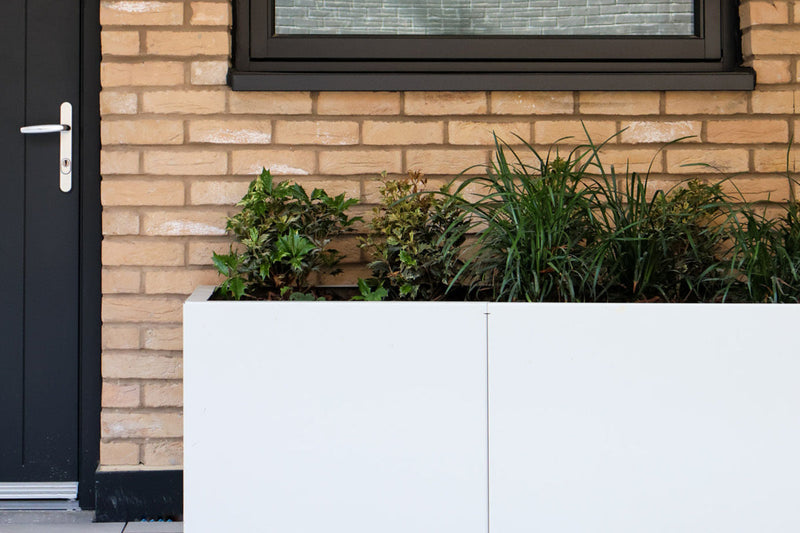
- Powder-coated steel raised beds
- Powder-coated garden planters
- Steel landscape features exposed to moisture
- External architectural steel requiring a coloured finish
However, galvanising generally isn't necessary when using:
- Corten / weathering steel
- Stainless steel
That's because these materials use different mechanisms to provide corrosion resistance.
Why Galvanise Powder-Coated Garden Edging?
This is one of the most important applications to understand.
Powder coating provides an attractive, durable outer finish and gives landscape designers and homeowners access to a huge choice of colours.
But powder coating alone shouldn't necessarily be treated as the underlying corrosion-protection strategy for exterior mild steel.
If the coating is deeply scratched, chipped or otherwise compromised, moisture can potentially reach the steel underneath.
Using appropriately prepared galvanised steel beneath the powder-coated finish adds another layer of protection.
For GEO products, this allows us to combine the architectural appearance of powder-coated steel garden edging and raised beds with corrosion protection suited to exterior environments.
Hot-Dip Galvanised vs Pre-Galvanised Steel: What's the Difference?
Not all galvanised steel is produced in the same way.
The two approaches relevant to landscaping products are often described as hot-dip galvanising after fabrication and pre-galvanised/zinc-coated sheet steel.
Hot-Dip Galvanising
With traditional hot-dip galvanising, a fabricated steel component is immersed in molten zinc.
The zinc reacts with the steel to create a strongly bonded protective coating.
Hot-dip galvanising can provide excellent corrosion protection and is commonly used for structural outdoor steelwork, fencing, infrastructure and other exposed applications.
However, it isn't automatically the best process for every landscaping component.
Thin steel components can be more susceptible to distortion during the high-temperature galvanising process. The dimensions of fabricated components can also be limited by the available galvanising bath.
Pre-Galvanised Sheet Steel
For products manufactured from thinner sheet material, pre-galvanised steel can provide a better manufacturing solution.
The steel sheet receives its zinc coating before the finished component is fabricated.
This gives manufacturers a smooth, consistent material that can then be appropriately prepared and finished.
It's particularly useful for products such as powder-coated steel raised beds and planters, where both corrosion resistance and a high-quality architectural finish matter.
Technical note: Welding zinc-coated steel requires appropriate processes and fume controls. It should only be undertaken by suitably equipped professionals.
Why Not Simply Use Thicker Mild Steel?
More steel doesn't automatically mean better performance.
A landscaping product should be designed around its application, loading, connections, finish and environment rather than relying solely on material thickness.
Intelligent features such as rolled edges, engineered connections and correctly positioned supports can add rigidity while keeping a system efficient and straightforward to install.
This is the philosophy behind GEO's engineered steel landscaping systems.
When Should You Choose Corten Steel Instead?
Corten steel, also known as weathering steel, works differently from galvanised mild steel.
When correctly exposed to suitable environmental conditions, the surface develops a distinctive weathered patina. This oxide layer helps slow further corrosion and gives Corten its characteristic orange-brown appearance.
Corten is particularly popular for:
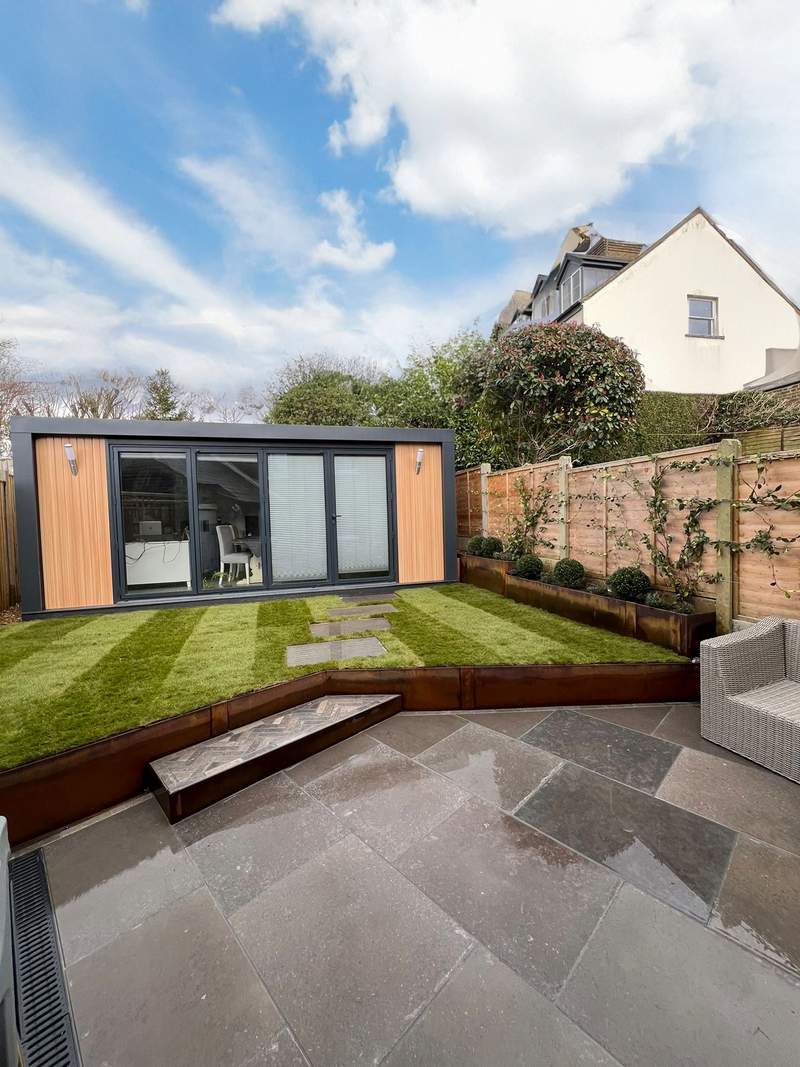
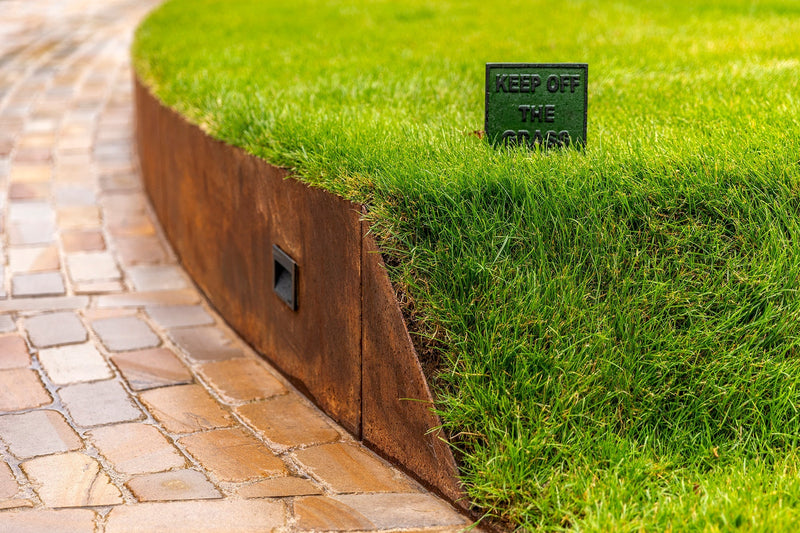
- Steel garden edging
- Raised garden beds
- Contemporary landscapes
- Naturalistic planting
- Gravel gardens
- Architectural landscape features
It also doesn't require powder coating to achieve its distinctive appearance.
One thing to consider with Corten
During weathering, runoff can stain nearby pale paving and masonry.
If you're installing edging immediately beside light porcelain or natural stone, consider the detailing carefully or choose an alternative finish such as powder-coated or stainless steel.
When Should You Choose Stainless Steel?
Stainless steel achieves corrosion resistance through its alloy composition rather than through a galvanised coating.
For landscaping, stainless steel is particularly effective when you want:
- A premium contemporary appearance
- Excellent corrosion resistance
- Minimal maintenance
- A clean architectural finish
Grades such as 316 stainless steel can be particularly useful in more demanding environments, although the appropriate grade should always be selected for the specific application.
Stainless steel generally sits at the premium end of the price range but creates a distinctive finish that can work beautifully alongside stone, porcelain and contemporary architecture.
Galvanised vs Corten vs Stainless Steel Garden Edging
I'd add this table to the Shopify article because it's excellent for visitors comparing finishes:
| Material | Corrosion Protection | Appearance | Maintenance | Best For |
|---|---|---|---|---|
| Galvanised + Powder Coated Steel | Zinc layer + coating | Almost any RAL colour | Low | Contemporary gardens, coloured edging and raised beds |
| Corten Steel | Protective weathering patina | Warm rust/brown | Very low | Naturalistic and contemporary landscapes |
| Stainless Steel | Corrosion-resistant alloy | Premium metallic finish | Low | Luxury gardens and architectural landscapes |
Which Finish Is Best for Your Garden?
There's no single finish that's right for every project.
Choose powder-coated galvanised steel when you want a specific colour or a clean architectural finish.
Choose Corten steel when you want a natural, evolving patina that works beautifully with planting.
Choose stainless steel when you're looking for a premium metallic finish and excellent corrosion resistance.
The right choice depends on your garden design, surrounding materials, budget and the environment in which the product will be installed.
How GEO Protects Outdoor Steel
At GEO, we design and manufacture steel landscaping systems for long-term outdoor use.
Rather than simply adding more material, we consider the complete system — including steel specification, structural design, connections, protective finishes and installation.
This approach allows us to create steel garden edging, raised beds, retaining walls and planters that combine straightforward installation with the clean architectural finish expected from premium landscapes.
And if you're unsure which finish is right for your project, our team can help you compare the options before you order.
Frequently Asked Questions
Does galvanised steel rust?
Galvanised steel is highly resistant to corrosion, but the zinc coating can eventually deteriorate depending on the environment, exposure and coating specification.
Is galvanised steel suitable for garden edging?
Yes. Galvanised steel can provide excellent corrosion protection for outdoor garden edging, particularly when used beneath an appropriate powder-coated finish.
Does powder-coated steel need to be galvanised?
For external mild steel, adding an appropriate zinc-based protective layer beneath the powder coating can significantly improve corrosion protection if the outer coating is damaged.
Is Corten steel galvanised?
No. Corten is a weathering steel designed to develop a protective surface patina, so it doesn't normally require galvanising.
Which is better: Corten or galvanised steel?
Neither is universally better. Corten is ideal when you want a natural weathered appearance, while galvanised and powder-coated steel is better when you want a consistent coloured finish.
Does stainless steel need galvanising?
No. Stainless steel contains alloying elements that provide corrosion resistance without requiring a zinc coating.
What is the best steel for garden edging?
It depends on the project. Corten works particularly well for natural landscapes, powder-coated galvanised steel provides colour flexibility, and stainless steel offers a premium contemporary finish.
Find the Right Finish for Your Garden
The finish isn't simply about colour. It affects the appearance, maintenance and long-term performance of your landscaping system.
Explore GEO's British-made steel garden edging, Contour raised beds, ANCO retaining walls and steel planters, or talk to our team if you'd like help choosing the right material for your project.