Is Garden Edging Worth It? Here’s What You Need to Know
Yes — in most gardens, good-quality edging is worth the investment.
It does more than make a garden look tidy. The right edging helps define lawns, paths and planting beds, reduces maintenance, improves material separation and gives the whole landscape a more finished, professional appearance.
For homeowners, landscapers and garden designers, the real question isn’t whether garden edging has value. It’s which type of edging is right for the job.
This guide explains the benefits, costs and different garden edging options so you can decide whether it’s worth investing in for your project.
What Does Garden Edging Actually Do?
Garden edging creates a physical and visual boundary between different areas of a landscape.
Depending on the system, it can be used to separate:
- Lawns and flower beds
- Gravel and planting
- Paths and borders
- Driveways and landscaping
- Raised planting areas
- Different garden levels
It may look like a small detail, but edging often has a significant impact on how finished a garden feels.
1. Garden Edging Creates Cleaner, More Defined Spaces
One of the biggest benefits of garden edging is simple: it makes a garden look better organised.
Without a defined edge, lawns can creep into beds, gravel can migrate and different materials begin to blend together.
A clean border creates structure and gives planting, paving and lawn areas a more intentional appearance.
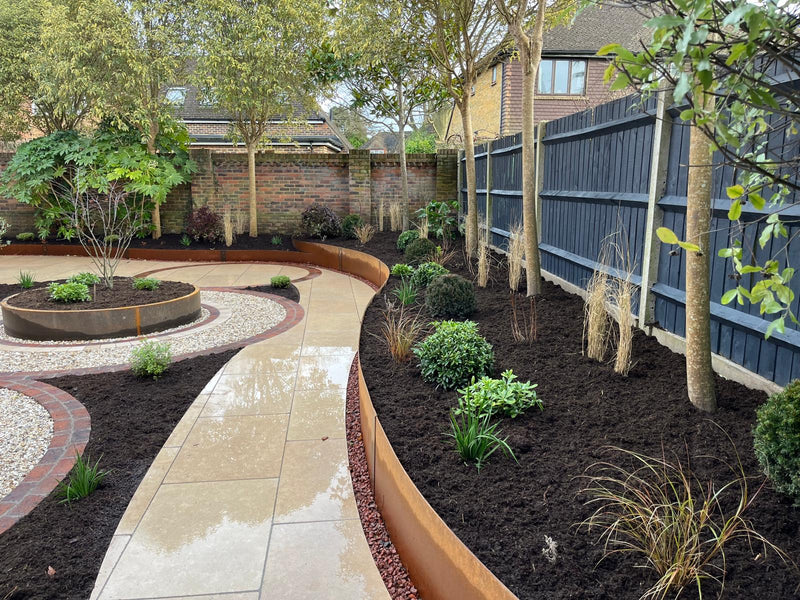
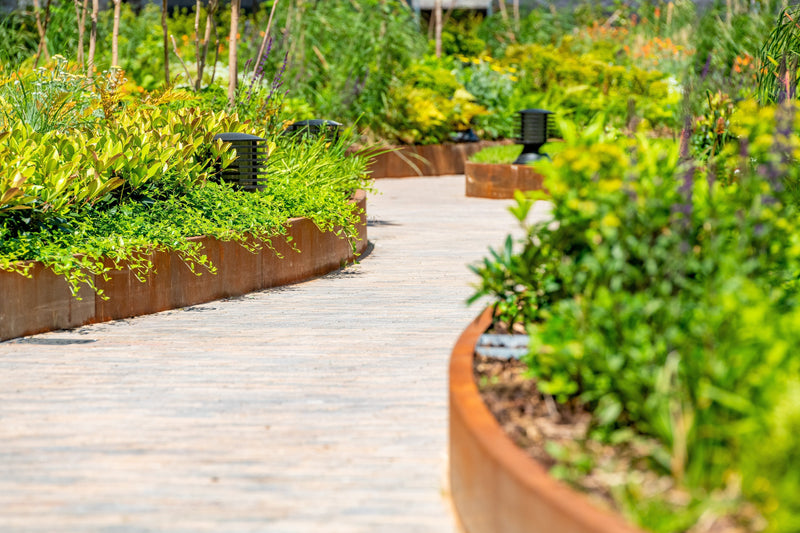
Low-profile steel garden edging, such as Groundline, is particularly effective because it creates crisp definition without becoming visually dominant.
2. It Can Reduce Garden Maintenance
Good edging can make ongoing maintenance easier.
A clearly defined lawn edge can reduce the amount of trimming required and helps limit grass spreading into flower beds.
It can also help contain:
- Gravel
- Mulch
- Decorative stone
- Soil
- Planting media
That doesn’t mean edging eliminates weeds entirely, but it does create a much clearer boundary between different materials and planting areas.
3. It Adds a Professional Finish
Garden edging is one of those details you may not consciously notice when it’s done well — but you immediately notice when it’s missing.
Clean, consistent lines make gardens feel more considered.
This is especially important in contemporary landscapes, where materials such as steel, porcelain paving and architectural planting rely on precision and simplicity.
4. Steel Garden Edging Can Last for Decades
Cheap plastic or untreated timber can deteriorate, move or become brittle over time.
A correctly specified steel edging system offers significantly greater durability.
Depending on the finish, steel garden edging can be supplied in:
- Corten weathering steel
- Powder-coated steel
- Stainless steel
Each offers a different appearance while providing a long-term solution for outdoor landscaping.
Is Steel Garden Edging Worth the Cost?
For many projects, yes.
Steel typically costs more upfront than basic timber or plastic edging, but the initial price doesn’t tell the whole story.
A lower-cost system that needs replacing after a few seasons may ultimately cost more than a durable steel system that remains in place for years.
Steel also tends to offer:
- Better rigidity
- Cleaner lines
- More consistent curves
- Less maintenance
- A slimmer profile
- Greater design flexibility
That makes it particularly attractive for premium residential gardens and professional landscape projects.
Garden Edging Cost vs Long-Term Value
When comparing edging options, think beyond the purchase price.
| Material | Initial Cost | Typical Maintenance | Longevity | Finish |
|---|---|---|---|---|
| Plastic | Low | Low–medium | Lower | Basic |
| Timber | Low–medium | Medium–high | Medium | Natural |
| Brick | Medium | Low | High | Traditional |
| Concrete | Medium–high | Low | High | Heavy/formal |
| Steel | Medium–high | Low | High | Clean/architectural |
The cheapest option on day one isn’t always the cheapest over the life of the garden.
When Is Garden Edging Particularly Worthwhile?
Garden edging delivers the most value where clear separation and long-term performance matter.
It’s especially useful for:
Lawn and Flower Bed Edging
Low-profile edging creates a crisp line between grass and planting.
Best GEO solution: Groundline Garden Edging.
Gravel Paths and Borders
Steel helps stop loose materials spreading into neighbouring planting or lawn areas.
Raised Garden Beds
For taller planting areas, a dedicated raised bed system gives better support than standard lawn edging.
Best GEO solution: Contour Raised Beds.
Level Changes and Retaining
Where soil needs structural support, decorative edging is no longer enough.
A dedicated retaining wall system is required.
Best GEO solution: ANCO Steel Retaining Walls.
Feature Planters
For courtyards, entrances and contemporary gardens, freestanding steel planters can introduce structure without permanent construction.
Best GEO solution: Contain Garden Planters.
What Type of Garden Edging Should You Choose?
There is no single system that suits every application.
Groundline – Low-Profile Garden Edging
Best for:
- Lawns
- Flower beds
- Gravel
- Paths
- Driveways
Groundline creates clean borders with a slim rolled-top profile and can form both straight and curved layouts.
Contour – Raised Garden Beds
Best for:
- Raised planting
- Curved beds
- Circular planters
- Multi-level gardens
Contour is a modular steel raised bed system designed to create straight runs, curves and radii without complicated fabrication.
ANCO – Structural Retaining Walls
Best for:
- Significant level changes
- Structural soil retention
- Bespoke landscape schemes
- Premium professional projects
ANCO is manufactured to exact project dimensions and is designed where structural performance and architectural finish are both important.
What Are the Downsides of Garden Edging?
Garden edging isn’t perfect for every situation.
A few things to consider:
Initial Cost
High-quality steel systems cost more than basic plastic or timber alternatives.
Installation
Poorly installed edging can move, bow or create inconsistent lines.
Choosing a system designed for straightforward installation makes a significant difference.
Wrong Product for the Job
Low-profile edging should not be used where significant soil pressure or structural retention is required.
This is where choosing the correct system matters.
Finish Selection
Corten looks beautiful in many gardens, but its weathering runoff can stain pale paving during the patina-development stage.
Powder-coated or stainless steel may be better beside light porcelain or stone.
Steel vs Timber vs Plastic Garden Edging
If you’re deciding whether steel is worth the extra cost, the comparison is relatively simple.
Steel
Best for long-term durability, clean lines and premium landscapes.
Timber
Good for natural-looking, lower-cost projects but requires more maintenance and can eventually rot.
Plastic
Cheap and simple to install, but often less rigid and less visually refined.
For a short-term or temporary garden project, plastic may be perfectly adequate.
For a landscape you want to look good for years, steel usually offers stronger long-term value.
Does Garden Edging Increase Property Appeal?
Garden edging alone won’t transform the value of a property, but well-finished landscaping absolutely influences first impressions.
Defined lawns, organised planting beds and clean material transitions make outdoor spaces feel better maintained and more professionally designed.
For homeowners preparing a garden for entertaining, enjoyment or sale, those details can make a significant difference to how the space is perceived.
Is Garden Edging Worth It for Landscapers?
For professionals, good edging can offer additional benefits beyond appearance.
An engineered system can:
- Speed up installation
- Improve consistency
- Reduce site fabrication
- Make estimating easier
- Deliver repeatable finishes
- Reduce snagging
That’s particularly valuable on larger residential and commercial landscape projects where programme and labour costs matter as much as material cost.
Frequently Asked Questions
Is garden edging really necessary?
Not always, but it is highly beneficial where you want clear separation between lawn, planting, gravel or paths.
What is the best material for garden edging?
Steel is one of the best all-round options for durability, clean design and long-term performance. Timber, brick, concrete and plastic suit different budgets and styles.
How long does steel garden edging last?
High-quality steel garden edging can last for decades when correctly specified and installed.
Does garden edging stop weeds?
Not completely. It helps define boundaries and can reduce the spread of grass and planting materials, but it does not replace weed control.
Is Corten steel good for garden edging?
Yes. Corten develops a natural protective patina and works particularly well in contemporary and naturalistic landscapes.
Is metal garden edging expensive?
Metal edging usually costs more than basic timber or plastic initially, but its long lifespan and low maintenance can make it more cost-effective over time.
Can steel garden edging be curved?
Yes. Flexible steel systems such as Groundline can form both straight runs and smooth curves.
So, Is Garden Edging Worth It?
For most permanent garden projects, yes.
The biggest benefits aren’t just aesthetic.
Good edging improves definition, reduces maintenance, helps separate materials and creates a cleaner, more professional finished landscape.
The key is choosing the right system.
Use Groundline for low-profile borders, Contour for raised planting, ANCO for structural retaining and Contain for freestanding planters.
When the product matches the application, garden edging becomes much more than a finishing touch — it becomes part of the structure of the whole landscape.
Find the Right Garden Edging for Your Project
Whether you’re refreshing a lawn border or planning a complete garden transformation, GEO manufactures British-made steel landscaping systems designed for homeowners, garden designers and professional landscapers.
Explore our steel garden edging, raised beds, retaining walls and planters, or talk to our team for practical advice on the right solution for your project.