Garden Zoning Ideas: How to Divide Your Garden into Beautiful, Usable Spaces
One of the biggest changes in modern garden design is that we no longer expect a garden to perform just one job.
Today's garden might need to be somewhere to entertain friends, grow vegetables, let children play, encourage wildlife and relax at the end of the day.
That is where garden zoning comes in.
Rather than treating the garden as one large space, zoning divides it into individual areas with different purposes. Current UK consumer research suggests this trend is significant: 55% of UK adults have already created or are planning to create distinct zones within their outdoor spaces.
The question is: how do you create garden zones without making the garden feel cluttered?
1. Define a Lawn Area
A crisp lawn immediately gives a garden structure.
Rather than allowing grass to gradually merge into flower beds, gravel or paving, installing a defined edge creates a deliberate boundary.
Steel garden edging works particularly well because its narrow profile creates separation without introducing a visually heavy border.
Our Groundline garden edging can be used around lawns, paths, driveways and planting beds, with straight or curved layouts allowing the lawn to become part of the overall garden design.
A sweeping curve can make a garden feel softer and larger, while straight lines can create a more architectural appearance.

2. Create an Outdoor Dining Zone
Outdoor entertaining remains an important part of modern garden design.
A dining terrace can be separated from surrounding planting using changes in material, level or edging.
For example:
Patio → Steel edge → Gravel strip → Planting
This small transition makes the dining area feel intentional without physically closing it off.
You can also use raised planting around a terrace to create a feeling of enclosure.
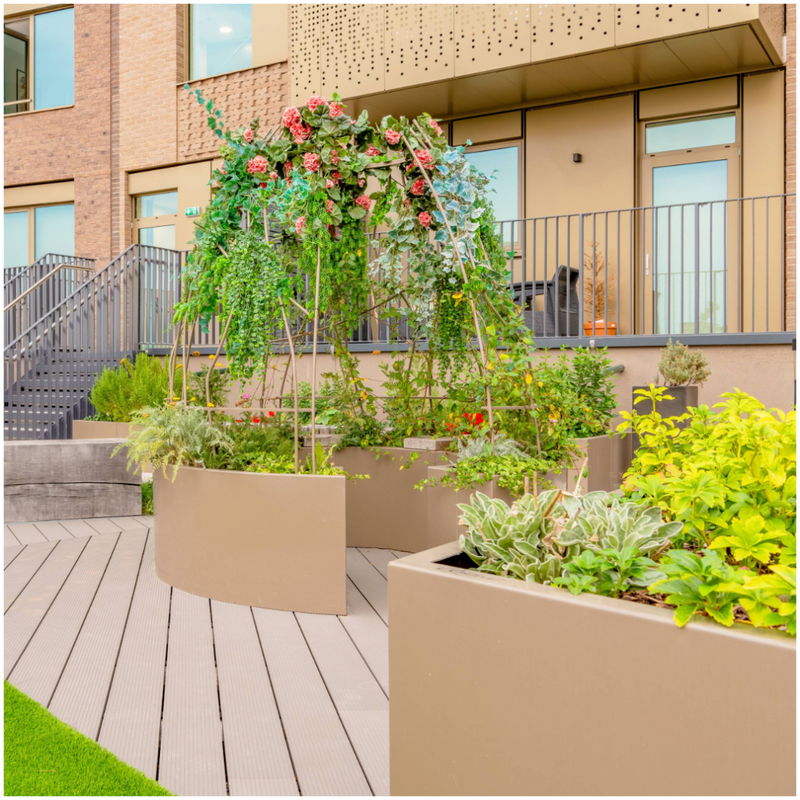
A Contour raised bed filled with ornamental grasses or evergreen planting can create a natural screen while maintaining an open feel.

3. Introduce a Grow-Your-Own Zone
Growing food is becoming increasingly relevant to garden design. The RHS predicts continued interest in compact vegetable growing as people look for practical ways to supplement food shopping, even where garden space is limited.
Raised beds make this considerably easier.
Instead of hiding your vegetable garden away, why not make it part of the design?
Steel raised beds can create organised growing areas for:
- Herbs
- Salad leaves
- Tomatoes
- Strawberries
- Vegetables
- Fruit
- Cut flowers
Contour can create both straight and curved raised beds, allowing productive gardening to become an architectural feature rather than an afterthought.

4. Create a Wildlife Zone
Modern gardens don't have to be immaculate everywhere.
In fact, deliberately allowing part of the garden to become more natural can provide a beautiful contrast to structured areas.
The RHS describes domestic gardens as important habitats for UK biodiversity, supporting significant proportions of Britain's butterflies, amphibians, reptiles, birds and mammals.
Consider creating an area containing wildflowers, ornamental grasses, a small pond, log piles or wildlife-friendly planting.
The trick is making it look deliberate.
A crisp steel edge around a wildflower meadow creates a clear distinction between designed wildness and an untidy lawn.

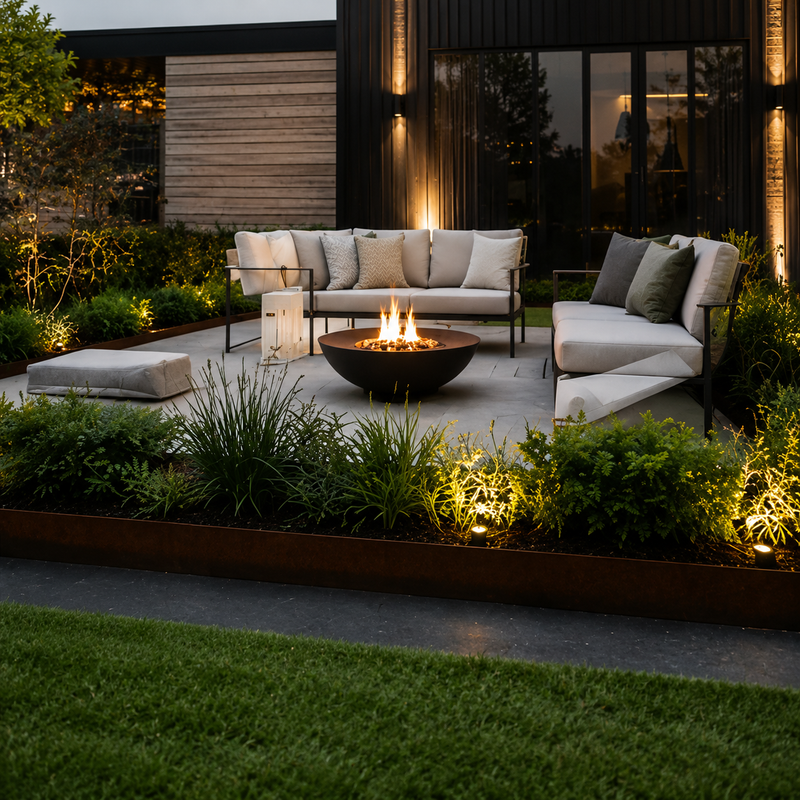
5. Create a Relaxation Zone
Gardens are increasingly becoming places to switch off.
A secluded seating area could include:
- A bench
- Outdoor sofa
- Fire pit
- Water feature
- Pergola
- Large planters
- Fragrant planting
Large steel planters are particularly useful because they can create privacy without requiring permanent walls.
Strategically placed planters can screen seating areas while adding height and planting to otherwise hard-landscaped spaces.

6. Use Different Levels
If your garden slopes, don't automatically see it as a disadvantage.
Changes in level can actually make zoning easier.
Retaining walls allow a slope to be transformed into terraces, with each level serving a different purpose.
You could have:
Upper terrace: dining.
Middle terrace: lawn and planting.
Lower terrace: fire pit or entertaining area.
Steel retaining walls can achieve these changes without the visual bulk associated with traditional masonry walls.

Why Steel Edging Works So Well for Garden Zoning
Good zoning needs boundaries, but those boundaries don't necessarily need to dominate the design.
That is where steel excels.
Its relatively slim profile means it can provide structure while allowing the planting, paving and architecture to remain the main features.
It can also follow both curves and straight lines, meaning one material can help connect multiple areas of the garden.
Final Thoughts
The best modern gardens aren't necessarily the largest.
They're the ones that use their available space intelligently.
By creating clearly defined areas for relaxing, entertaining, growing, playing and planting, you can make considerably more use of the garden you already have.
Ready to start zoning your garden?
Explore GEO's Groundline garden edging, Contour raised beds, Anco retaining walls and Contain planters to find the right system for your design.
SHOP GEO → Create your garden, one zone at a time.