Climate-Resilient Garden Design: How to Future-Proof Your Outdoor Space
British gardens have always had to deal with unpredictable weather.
But designing for extremes is becoming increasingly important.
The RHS identifies climate change as a major driver of UK gardening in 2026, with gardeners increasingly thinking about planting diversity, water management and resilience.
So what does a climate-resilient garden actually look like?
It isn't necessarily a garden filled with specialist technology.
Often, it's simply a garden designed to handle water, heat and changing conditions more intelligently.
1. Think About Water Before Plants
Drainage is one of the least exciting parts of garden design.
Until it goes wrong.
Before installing expensive planting or landscaping, understand where water travels through your garden.
Look for:
- Low points
- Existing waterlogging
- Sloping ground
- Heavy clay
- Runoff from paving
- Downpipes
- Retaining walls
Once you understand the movement of water, the rest of the landscape can be designed around it.

2. Don't Trap Water Behind Retaining Walls
Retaining walls deserve particular attention.
Water accumulating behind a retaining structure creates hydrostatic pressure.
That pressure needs to be managed.
Depending on the design, solutions can include free-draining backfill, drainage pipes, membranes and appropriately designed drainage outlets.
The taller the retaining wall, the more important proper specification becomes.
This is why retaining systems shouldn't simply be chosen because they look good.
They also need to perform.
For larger level changes, GEO's Anco steel retaining-wall system provides an engineered approach to creating structural garden levels.

3. Consider Gravel and Permeable Areas
Not every part of a garden needs paving.
Gravel and other permeable landscaping materials can help water enter the ground rather than immediately becoming surface runoff.
They can also work beautifully alongside steel edging.
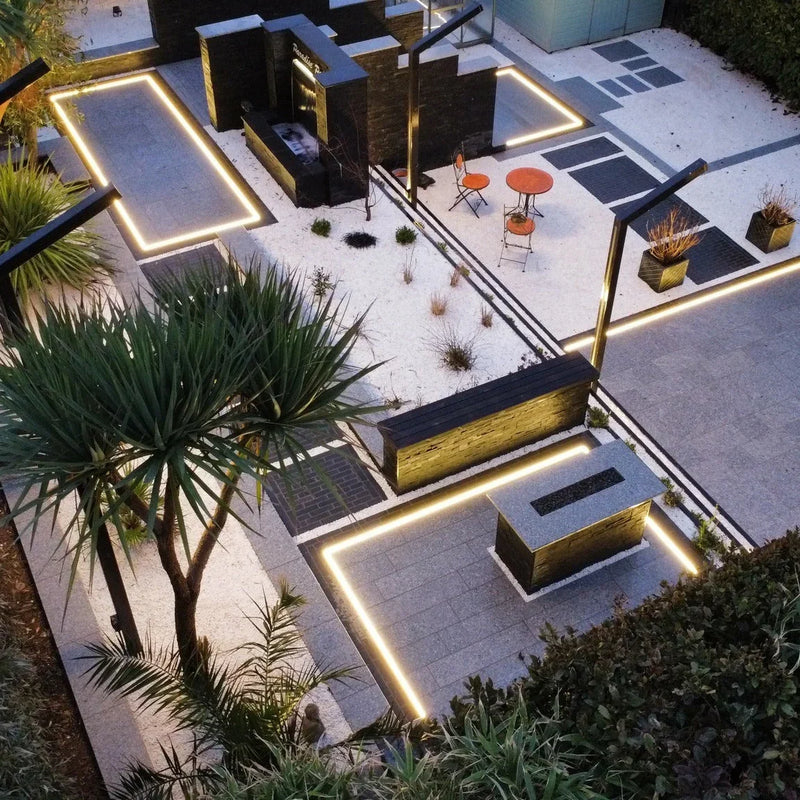
Groundline can create the transition between gravel, lawns and planted areas, preventing loose material from gradually migrating across the garden.

4. Create Deeper Planting Areas
Raised beds aren't only about appearance.
They can give you much greater control over soil.
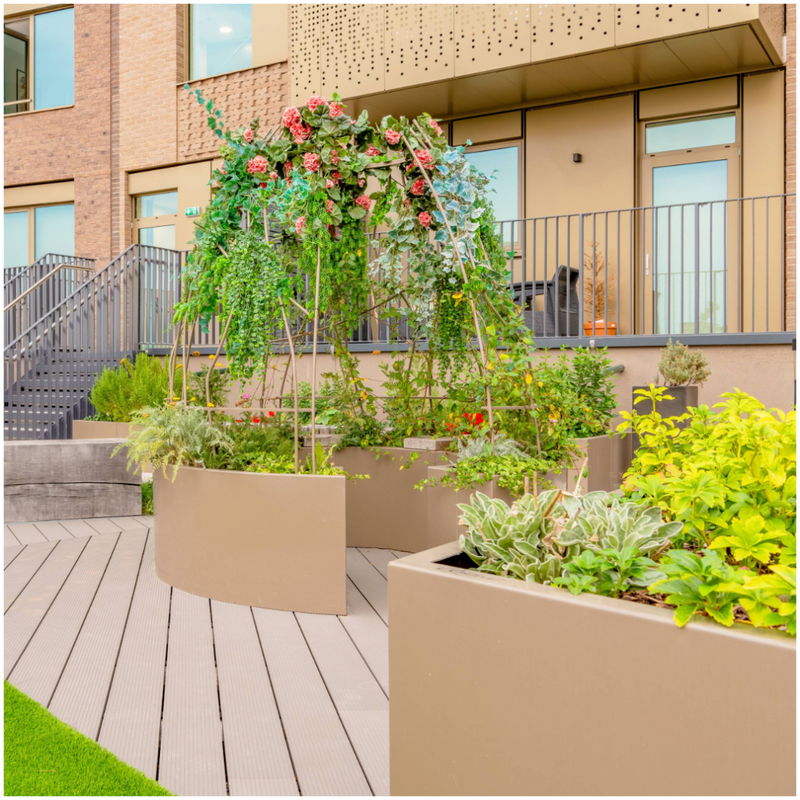
If your existing ground is difficult, creating raised planting allows you to introduce the soil structure your chosen plants need.
It can also introduce significant planting depth without extensive excavation.

5. Choose More Resilient Planting
Plant choice is changing alongside our climate.
Drought-tolerant and resilient planting doesn't necessarily mean filling a British garden with desert plants.
It means choosing species appropriate to the conditions and creating diverse planting rather than relying heavily on one type.
The RHS specifically expects planting diversity to become increasingly important as gardeners respond to changing weather.

6. Protect Soil
Bare soil loses moisture quickly in hot weather.
Plant coverage and appropriate mulches can help retain moisture while protecting soil structure.
Steel edging can contain mulch within beds rather than allowing it to spread across neighbouring lawns or paths.
Again, the edging isn't the star of the garden.
It's the infrastructure that allows everything else to work.

7. Buy Landscaping Materials for the Long Term
Extreme conditions aren't just hard on plants.
They're hard on landscaping materials too.
Timber can deteriorate through repeated moisture exposure.
Poorly specified metal can corrode.
Walls can move when drainage hasn't been considered.
The more permanent an element is, the more important its specification becomes.
A garden wall that needs replacing isn't just the cost of a new wall – it can involve removing planting, excavating soil and rebuilding surrounding landscaping.
That's why longevity matters.
Build Once. Plant for the Future.
Climate-resilient garden design isn't about predicting exactly what British weather will do next.
It's about creating a landscape capable of adapting.
Manage water.
Choose appropriate plants.
Use durable materials.
Design drainage correctly.
And invest in the permanent structure of the garden.
GEO's range of Groundline edging, Contour raised beds and Anco retaining walls can help create the structure behind a garden designed for long-term performance.
Explore GEO's British-made steel landscaping systems →