Corten steel for landscaping: The complete guide
You asked about Corten steel for gardens; this is the honest, practical guide we share with clients every day.
What Corten steel actually is
Corten is a family of weathering steels that form a stable, protective patina. The surface rust locks to the metal and slows further corrosion; the result is a warm, earthy finish that works with planting rather than against it. The colour moves from orange to a deeper brown over time; wet and dry cycles help the patina mature.
Corten is structural steel at heart. It cuts cleanly, bends predictably, and fixes with standard tools. For edging and features, most projects use flat strips, rings, planter panels, or fabricated steps.

Where Corten steel works best in a garden
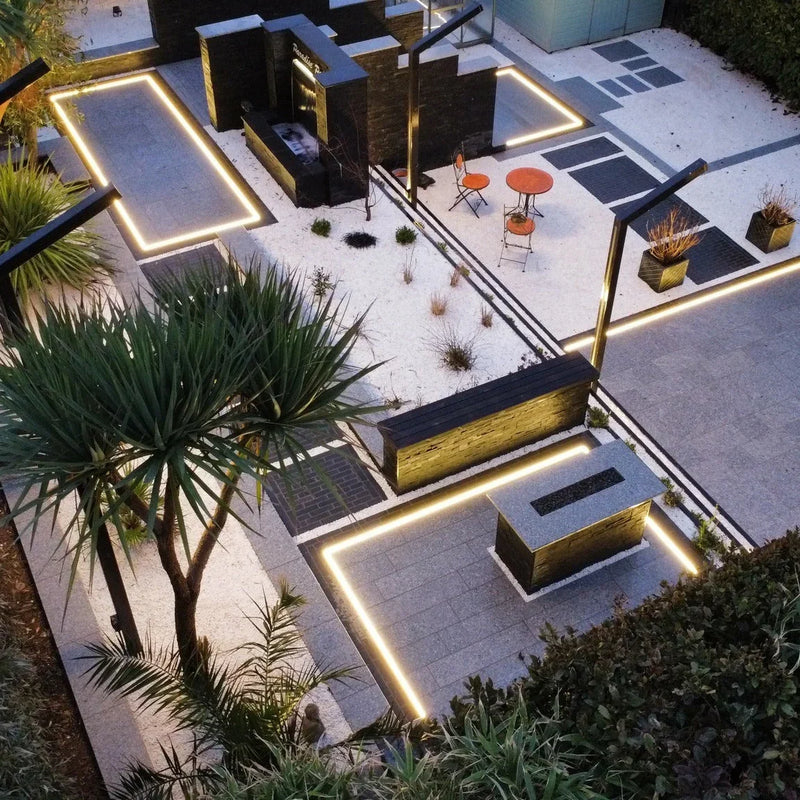
Edging that defines lawns, paths, resin bound areas, and borders
- Retaining steps or planting terraces
- Rings around specimen trees
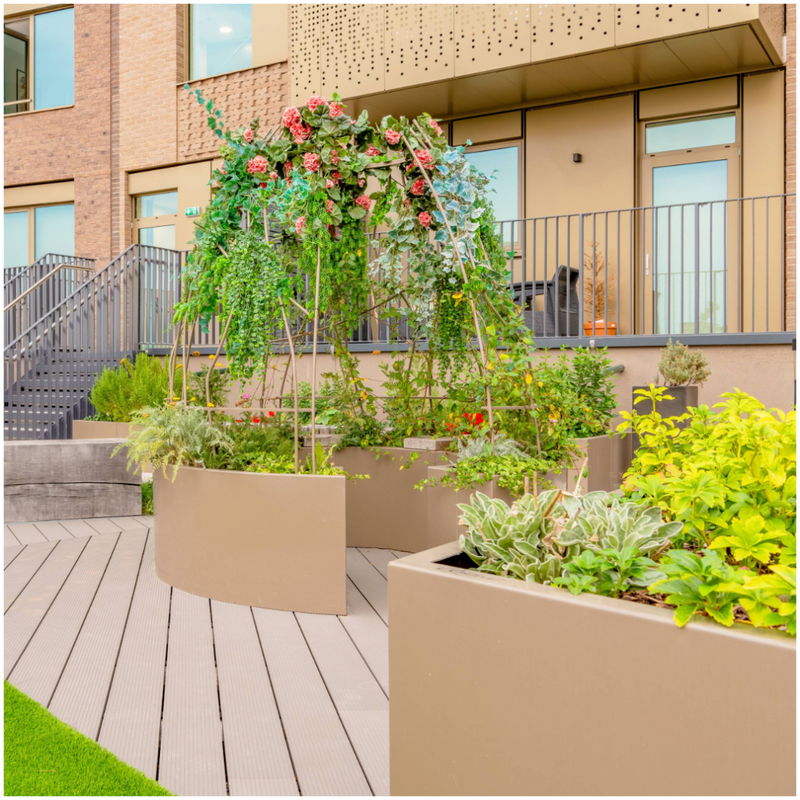
- Feature planters or water rills
- Transition lines between gravel and planting where a crisp shadow line matters
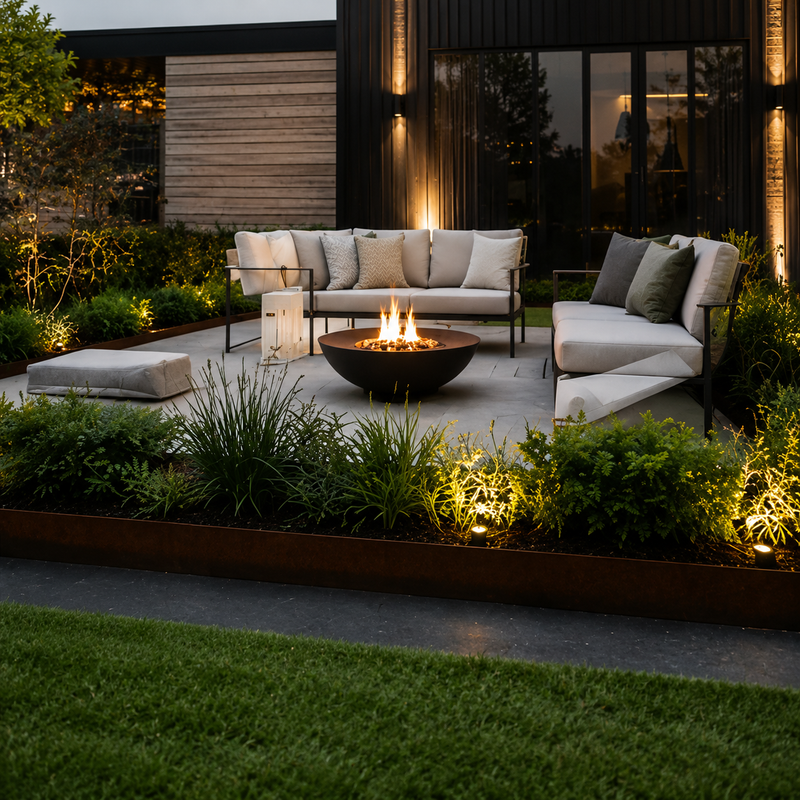
The material settles visually as plants fill out; grasses, ferns, and perennials love the contrast. Contemporary schemes use it for order and rhythm; cottage and woodland schemes use it for warmth and texture.
How much Corten steel costs
The cost depends mainly on the height and type of system you need. To make budgeting easier, here are some current examples:
-
100mm Groundline garden edging: £116.77 for a 10-metre pack — approximately £11.68 per metre
-
200mm Groundline garden edging: £122.28 for a 6-metre pack — approximately £20.38 per metre
Each Groundline pack includes the Corten steel edging panels, ground stakes and joining components needed for installation.
For taller planting areas, our Contour raised-bed system is available from 200mm to 600mm high. As an example, £109.01 per meter for 400mm high and £137.66 per meter at 600mm high. These bundles include the panels, connectors, ground posts and supports required to form straight or curved raised beds.
Freestanding Bloc Corten planter tubs start from £262.28 for a 500mm square planter and rise to £611.35 for a 2 metre long planter.
For structural level changes, Anco retaining walls are designed and priced specifically for each project. They can be manufactured from 100mm to 1200mm high, with straight, curved and corner sections made to suit the design.
Delivery, optional corners, extra supports and installation are not included in these examples. Prices can change, so check the relevant product page for the latest price before ordering.
Which thickness and height to choose
Think about how the edge will be used; traffic and loading determine thickness, while height controls how crisp the line appears.
2mm
Light duty garden borders; gentle curves; hand install
3mm
The everyday choice for lawns, gravel paths, resin bound areas, and most curves
5mm
Driveway edges, light vehicle overrun, or where you want a commanding visual line
For height, 100mm keeps lawns in check; 150 suits gravel and bark; two hundred gives presence next to deep planting or level changes. Where you need a raised bed, our Contour system goes up to 600mm high. For retaining walls, you'll need a concrete foundation; Anco reaches an impressive 1200mm.
Will Corten steel stain paving or gravel

How long Corten steel lasts in a garden
In typical British gardens, edging in 3mm thickness has a very long service life. The patina protects the steel, provided the surface can dry between wet periods. Constant damp, buried leaf litter, or trapped soil against the face slows the patina and reduces life. Build for breathability; keep mulch slightly back from the face; allow air and drainage behind planters.
Coastal exposure with salt spray is harsh on any steel. If your site sits right on the shoreline, ask for a specification review; a different alloy or finish may suit the environment better.
Installation in plain language
You can install Corten edging with standard landscaping tools. Take your time on the set out; the line you strike is the line you will live with.
- Mark your line with pins and string or a spray marker; step back and check the view from key spots
- Cut a neat trench that matches your design height; remove soft spots
- Start at a fixed point such as a doorway or a corner; set your first length dead level
- Join lengths with supplied connectors or back plates.
- Fix stakes on the garden side; space them roughly, closer on tight curves
- Backfill and compact carefully in shallow lifts; do not push soil over the top edge
- Leave a crisp reveal; 5 to 10mm above the finished surface reads cleanly
- Curves are simple. For tight radii, prebend lengths or use factory made rings.
Common problems and how to prevent them
Patina patchiness
Normal in the early weeks; even out with patient wet and dry cycles
Heave from roots or freeze thaw
Use deeper stakes and compacted sub base on paths and drives
Movement at joins
Check connectors are seated fully and re fix.
Soil creep into gravel
Keep the reveal proud; use a suitable stabilising grid under loose gravel where needed
Corten steel compared with popular alternatives
Aluminium
Clean and light; good for fast curves; standard colour palette.
Mild steel
Cheaper at the start; needs paint or regular care because there is no protective patina
Timber
Warm and familiar; shorter life in ground contact
Concrete or stone
Permanent and solid; more excavation and setting time; a different visual language
Each material has a place. Choose based on longevity, edge crispness, and the character you want in the garden.

Care and maintenance
Corten asks for very little. Rinse splashy mud during the first season; keep mulch and soil a finger width back from the face; check stakes after the first winter if the line carries vehicle traffic. If an edge gets scuffed, the patina will reform naturally with exposure to weather.
Sustainability notes
Steel is highly recyclable; corten contains alloying elements in modest amounts and can re enter the steel cycle at end of life. Long service life reduces replacement cycles; precise edging also reduces gravel loss and soil migration, which keeps maintenance inputs down.
Straight answers to the questions we hear most
Can I place corten directly against resin bound or asphalt
Yes; keep a small reveal above the surface and set a tight joint. Use 5mm for heavy vehicle edges.
How quickly will it turn that rich brown
You see orange within days; it moves to deeper brown over a few months of British weather.
Can I keep the new steel look
No; the patina is the point of the alloy. If you want a stable silver tone, choose aluminium or stainless.
Do I need a top safety fold
For family spaces, a soft top detail is a smart choice. Our systems offer a fine return that reads elegant and feels safe to the touch.
Can I cut it on site
Yes; use a suitable blade or disc; seal any bright cut edges with a light wipe of water so the patina starts evenly.
How to order
Ordering is designed to be easy. Simply browse our product pages for the item that fits your project.
Garden Edging
Perfect for defining lawns, paths, or gravel areas. It creates crisp, lasting lines that keep planting and surfaces neat.
Raised Beds
Ideal for growing herbs, vegetables, or higher edging requirements . They add structure to a garden and make planting more accessible.
Retaining Walls
Used for level changes or supporting soil, they provide strength with a clean architectural finish. They can transform a sloping garden into usable terraces.
Planter Tubs
A flexible way to introduce greenery to courtyards, patios, or entrances. They bring planting into places where traditional borders don’t work.
Choose the size and style that suits your space, add to basket, and follow the checkout steps. If you are unsure which option best fits your design, we are always here to advise.
Final thought
Corten steel brings order, texture, and calm to a garden. It frames planting, keeps materials where they belong, and adds a quiet architectural line that grows more beautiful with age.